Going to join a few this summer! RT @NourishedFully: #DeliciousTip! Join a #fitness group to amp up & get inspiration for new work outs.
If You’re Going to Juice…
May 16, 2012 by Marni Wasserman
Filed under All, BEVERAGES, Delicious Recipes, For Your Health!, Super Foods
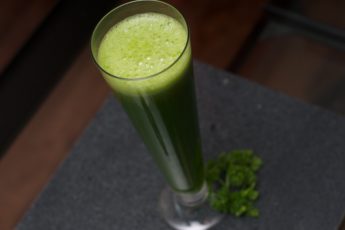
Make it organic! Or else you may as well not drink juice at all. When you juice conventional vegetables you are likely absorbing all the pesticides, herbicides, fungicides or genetically modified organism (GMO) stored in them. Because juices are so concentrated your body will soak up those chemicals immediately. Especially if you are doing a cleanse, this is crucial! I know you may be thinking, isn’t just drinking juice in general better than no juice at all? Well, there is something to be said about that, as it’s better than most people are drinking daily (soda, sugared coffees and pasteurized juice). However if you are making the effort to enhance your health, then you may as well go the full length and do it right!
If you’re not sold on juicing yet, here are some of the main benefits…
- It helps your body absorb the nutrients from the vegetables/fruits. Many individuals have difficulty digesting certain foods. As a result, the body doesn’t absorb all of the nutrients that the food provides. Juicing helps to “pre digest” the food for you, making it easier for your body to receive and absorb all of the nutrients.
- Juicing helps you increase your consumption of fruits and vegetables. Many individuals do not get enough fruits and vegetables throughout the day. Juicing allows you to obtain all of the beneficial nutrients in a quick and timely fashion.
- Juicing helps to broaden your intake of various fruits and vegetables. It is easy to stick to the same fruits and vegetables day in and day out. But it is important to rotate your intake of various foods to get the full spectrum of nutrients.
- It helps to improve your health and sustain a nutritious raw lifestyle. Eating a high percentage of raw fruits and vegetables contributes to high energy levels and faster recovery from illness…as well as a slower aging process.
- You are able to obtain all of the beneficial enzymes found in the produce, which is important for metabolism.
- The body receives a sufficient amount of phytochemicals, which help it to fight disease.
- Juicing provides the body with a high concentration of antioxidants, which help to combat free radicals.
- They are rich in vitamins and minerals and help to hydrate the body
- Juicing is a live liquid supplementation. Greater benefits than taking synthetic supplementation.
- There are lots of options when it comes to juice, play with different combinations!
To learn how and what to juice, join me at my Raw Essentials workshop or my Liquid Nutrition class this summer.
Problems with buying store bought juices:
- Juice in bottles is often pasteurized. This means it is heated to at least 145*F/62*C to make it shelf stable, thus deactivating the beneficial enzymes.
- Plastic packaging contains “leachables” or some sort of chemical component that ends up in the juice.
- Plastic is harmful to the environment as it contributes to pollution, affects wildlife, and ultimately ends up in the food chain.
Juice delivery cleanses:
In terms of juice delivery services, you need to ask yourself a few questions. How fresh is the juice? Are these companies adding in any preservatives to make the juice last longer? Are they using completely organic ingredients? Storing the juice in plastic bottles? It is hard to know. That is why it is best to juice your own fruits and vegetables. If you can’t get organic produce, wash thoroughly with a vegetable wash, peel and avoid anything that is known to be heavily sprayed (strawberries, blueberries, bell peppers , etc.) or cannot be peeled (like berries).
Depending on your budget there is a wide range of juicers to choose from use this resource to sort through them and go here to buy one!
However, one company in Toronto in particular is just quite a few steps above the rest and that’s Belmonte Raw. The owner, and my friend, Carol Belmont, strictly adheres to healthy, organic and environmentally friendly principles.
I will be doing her 5 day juice cleanse next week. So if anyone wants to join me and share their experience on Facebook or Twitter (@marniwasserman), or if you’ve already done one, please share your experience!
Looking for other inspiration to get started on cleansing?
Let it sprout!
December 2, 2011 by Marni Wasserman
Filed under All, Delicious Recipes, For Your Health!, Nourishing Resources, Super Foods
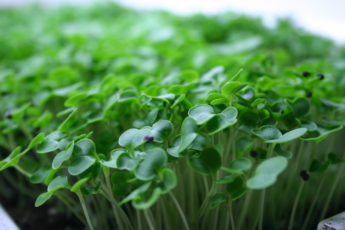
Most people don’t know what a sprout truly is. In fact I get a lot of people who think that when something is sprouted it has gone bad or gone off. In fact, the opposite is true.
When a grain, legume, nut or seed has been sprouted, the nutritional profile has more than doubled. Meaning protein, enzymes, fiber, antioxidants, vitamins and minerals and are at their optimum potential. Which means you will not only digest them efficiently, but you are getting so much more bang for your buck so to speak. Just a small amount goes a long way nutritionally speaking.
Sprouts are an alkalizing, living foods which continue to grow and gain vitamins after being harvested, which when compared to food bought at the supermarket that begin to lose their nutrient content as soon as they are picked (and are not then consumed for weeks on end), become very attractive – especially if you are trying to add more raw food to your diet.
Here are a couple of things to keep in mind.
How to Sprout
Get yourself a glass jar + cheesecloth or mesh lining. You can also use a stainless steel colander, sprouting jar or sprout kit. (Get your very own glass sprout kit – order one today at gethealthy@marniwasserman.com)
1. Soak your legume, grain, nut or seed for 8-10 hours.
2. Rinse and drain.
3. Continue to rinse and drain for 1-3 days until what you are sprouting starts to grow a shoot. When the shoot is as long as the item itself, it is ready to be consumed. (Important - be sure to rinse and drain at least 2 times/day or more. You can even add in 1 teaspoon of vitamin C or amla powder to one of your rinses to prevent mold growth)
4. After a sprout has formed be sure to consume right away and store in the fridge.
What to Sprout
Legumes: lentils, adzuki beans, chickpeas, mung beans
Grains: brown rice, quinoa, buckwheat, kamut, wild rice or wheat berries
Nuts: almonds, cashews
Seeds: sesame, sunflower, chia, flax
Benefits of Sprouts
All LEGUMES such as those mentioned above are highly concentrated in both protein and starch and are acid-forming unless sprouted. Sprouting helps to reduce the acid-alkaline imbalance which might occur when grains, legumes, and other proteins are used.
- Mung beans in particular, are similar in composition to fruits, are rich in vitamins A, C, and B complex.
GRAINS: Sprouted wheat berries has become a favorite with many who try to follow a natural diet. These sprouts contain vitamins C, E, B complex, magnesium, calcium, phosphorous, sodium, potassium, protein, enzymes, chlorophyll, and possibly B-17. In its cooked form, wheat is unacceptable to some individuals, causing mucus congestion, allergic reaction, and constipation. In its sprouted form, a large portion of starch is converted to simple sugars, making it a wholesome food acceptable to many who would otherwise need to eliminate wheat as a food source.
- Another way to use wheat is to grow the whole wheat berries as grass. The chlorophyll of wheat grass is very high. The wheat grass should be chewed to obtain the juice, discarding the pulp. Special juicers for wheat grass are now on the market.
Another grain amazing grain to sprout is buckwheat,which is rich in lecithin and rutin.
Most SEEDS contain a great deal of phosphorous, an important mineral for spiritual aspirants, who want to increase their alertness and mental abilities. Phosphorous is also necessary for healthy bones and teeth, a fact which makes sprouted seeds desirable for babies and children.
- Sunflower seeds are rich in vitamins B and D and all the essential amino acids.
- Sesame seeds are a rich source of calcium, iron, phosphorous, niacin, and protein.
- Alfalfa, probably the most popular sprouted seed, contains much chlorophyll, as well as vitamins A, B complex, C, D, E, G. K, and U. It also has large amounts of iron, calcium, phosphorous, and sulphur.
What if I don’t want to sprout?
Then get yourself equipped with some of these amazing products who have done a fabulous job for you!
Navitas Naturals – Sprouted flax and chia seeds
Sha Sha Bio Buds - (lentils, adzuki beans)
Bio Live – legume, rice and seed mixes, sprouted flax powders
Giddy Yoyo – pea shoots and sunflower sprouts – local to Toronto and will deliver to your door!
Wild Wood Tofu - Sprouted Tofu and Tempeh
See my latest ebook Purely Fit – that has a whole section on sprouts + some delicious recipes!
Or join my Raw Essentials Class this spring and learn how to do this hands on!
Soaking vs. Sprouting
When you soak a nut, grain, seed or legume you are making it easier to digest because you are neutralizing phytic acids (which is the indigestible component of grains and seeds). So when they are soaked, they become easier to digest and absorb.
It is possible to soak without sprouting. You can soak your grains before you cook them, for example soak brown rice or quinoa for 1 hour up to 8 hours before it is being cooked. Or you can soak whole rolled oats overnight and enjoy them the next morning either at room temperature or warmed up.
For nuts and seeds, they can just simply be soaked before you make them into a dip or a milk. However if you want to go the length to sprout them, they will require an extra day or so.