There are many options when it comes to eating #glutenfree ow.ly/lhobB @GlutenFreeFind @Glu10FreeGarage
Bursting for Blueberries
June 15, 2012 by Sophia
Filed under All, Cooking Classes, DESSERTS, For Your Health!, Info
Nearly at their seasonal prime, blueberries will be bursting their blue richness on Canadian soil over the coming weeks. If there were one berry to be consuming on a regular basis, it would be the blueberry. Blueberries are ranked among the top superfood fruits and vegetables for their antioxidant activity. Not only that but they are loaded with vitamins, minerals and other beneficial nutrients that make them even more delightful to consume.
If you don’t already have enough reasons why you should be consuming these blue gems…here’s a few more.
5 Benefits of eating blueberries
- Blueberries are a source of the antioxidant ellagic acid which blocks metabolic pathways that can lead to cancer
- Blueberry skins contain resveratrol – which has proven to have anti-cancer, anti-inflammatory and blood sugar lowering properties
- Blueberries are an excellent source of vitamin C, E and fiber.
- They are only 81 calories per cup!
- They’re a cool and refreshing fruit perfect for hot summer days!
5 Uses for Blueberries
- Combine them in a fruit salad with other berries
- Blend them into a smoothie for liquid nutrition
- Bake them into muffins or pancakes
- Eat them fresh right out of the container
- Make a blueberry pie!
Wild Blueberry Tart
Pie crust:
- 1 cup almonds, roasted and cooled
- 3/4-1 cup oat flour
- 2 tbsp maple crystals or organic sugar
- 1/4 tsp baking powder
- Pinch of sea salt
- 3 tbsp melted coconut oil
- 1/4 cup maple syrup
Filling:
- 2 tbsp agar flakes (natural form of gelatin)
- 1 3/4 cup apple juice
- 2 tbsp tapioca (or cornstarch) dissolved in 1/4 cup apple juice
- 2 tbsp maple syrup
- Sea salt
- 2 cups fresh wild blueberries, washed and drained
Directions
Preheat oven to 350F. Oil a 9” tart pan.
For the Crust:
- In food processor, grind nuts to a meal. In mixing bowl, combine nuts, flour, maple crystals, baking powder and salt.
- In separate small bowl, whisk together oil and maple syrup.
- Mix wet ingredients (oil and syrup) into dry ingredients (nut meal and flours).
- Press crust mixture into tart pan. Refrigerate 15-20 minutes, then bake 20-25 minutes. Let cool completely.
For the filling
- In a small pot, simmer agar flakes in apple juice until agar completely dissolves. When agar dissolves, add tapioca/juice mixture. Whisk until mixture thickens. Add maple syrup.
- Add pinch of salt and berries. Cook 6-8 minutes. Remove from heat and let mixture cool partially. Pour into cooled crust pan.
- Let set completely. Garnish with mint before serving. There may be a small amount of filling left, you can enjoy as a pudding by blending in food processor.
Superfoods for a Super You
June 6, 2012 by Sophia
Filed under Cooking Classes, DESSERTS, For Your Health!, Info, Nourishing Resources, Super Foods
It seems like more and more lately we keep hearing about superfoods. The question is, do you know what a superfood is and what qualifies it as a superfood?
What Are Superfoods?
Superfoods are a category of foods found in nature; they are superior sources of essential, super-power nutrients, nutrients we can’t make ourselves. They are the most powerful foods on the planet, and are powerhouses for the transformation to a slender, healthier you. If you are what you eat, why not be super?
Where Can I Find Them?
Superfoods can be found everywhere. You are likely using many of them already everyday. Not all superfoods come from exotic places like Costa Rica and Thailand – but many are right here in North America and can be found at your local health food store, grocery store or farmer’s market.
Everyday foods such as kale, quinoa, sweet potatoes, blueberries, and raw honey are amazing superfoods to start with. If you want to get exotic – include superfoods such as nori seaweed, cacao, goji berries, maca, Maqui, and mesquite as well.
Superfoods Also Include:
- Raw foods – (food not heated above 48 degrees Celsius or 120 degrees Fahrenheit),
- High enzyme foods - (foods that easily break themselves down are easier on our digestive system, such as mangoes, pineapple, papaya and avocados)
- Organic foods - (foods grown without pesticides, herbicides, and chemicals)
- Fresh, local foods (visit local farmers markets and taste the difference that local foods make!)
When Choosing Your Superfoods:
Look for foods with a variety of colour, texture, flavour and shapes. This makes your meals and snacks exciting! No one wants a boring meal that doesn’t taste good.
Focus on high nutrient-dense foods over low calories. Calories don’t determine how many vitamins, minerals, enzymes or overall nutrients are in a food item. Superfoods have concentrated nutrients (protein, carbohydrates and fats) and provide so much nutrition in every bite. It’s also important to get away from focusing on calories all the time. It can become obsessive and you may loose sight of actually consuming good quality food!
Why Superfoods?
They make you happy! They help you to actually lose weight because you will be eating foods that satisfy and satiate, rather than make you crave other foods! Your cells become saturated with nutrition. Plus:
- They give you energy
- They help your body to detoxify
- They give you mental clarity
- They promote activity and weight loss
- They improve immunity
- They clear and brighten your skin
Get started today and make some super recipes!
Or, if you need some help and you’re serious about getting more superfoods in your diet, let me help you in my Superfoods for Super Health workshop.
If you want a FREE spot in this class see details here!
Superfood Power Balls
What’s in it?
1/2 cup pumpkin seeds
1/2 cup sunflower seeds
2 tbsp hemp seeds
1 cup chopped dates
1/4 cup goji berries
2 tbsp cacao nibs or cocoa powder
1 tbsp raw honey or coconut nectar
1/2 tsp vanilla powder
1/2 tsp cinnamon
1/4 tsp sea salt
2 tbsp Sun Warrior Protein Powder (Use code MW007 when checking out at RAW ELEMENTS for 5% discount)
Here’s how to find some of these ingredients easily: Upaya Naturals & Navitas Naturals
How it’s made!
Place all the ingredients into the bowl of a food processor and pulse until you get a thick “doughy” consistency. Roll into bite size balls for quick power bites –perfect for your purse or a midday snack or after a workout.
What are your favourite Superfoods?
In Health,
10 Energy Boosting Foods
April 18, 2012 by Sophia
Filed under All, For Your Health!, Info, Nourishing Resources, Super Foods
It’s that time of year again when seeing the sun come out from behind the clouds makes me want to be outside. I want to play, and I want to get fit!
The question that’s always asked of me though, especially because I’m active and vegan, is how I have enough energy to get through my days and my workouts? Well, I simply say that I have the perfect solution: plant-based foods. Not only are they filled with the most highly nutritious and bio-available vitamins and minerals, but they taste great too.
Plant based foods provide all of the macronutrients (proteins, carbohydrates, and fats) essential in maintaining optimal energy. Since working out causes physical stress, it creates acidity in the body. In order to regain a state of alkalinity, it’s essential to neutralize the body by consuming a plant-based diet filled with neutralizing plant-based foods.
My top sources of energy foods:
- Hemp Seeds – contains omega 3 fats and provides long sustaining energy. I love to put them on salads, in smoothies and cereal.
- Chia seeds – are loaded with fiber and expand when soaked. Chia makes the most delicious morning porridge. Amazing for before my workouts.
- Kale - is a green leafy powerhouse veggie. It is loaded with magnesium and is alkaline forming. Chopped up in a raw salad or steamed on the side of quinoa, kale completes any plate.
- Sea vegetables – storing a wide range of trace minerals and nutrients, sea vegetables provide natural sodium to the diet. My favourite sea vegetable is arame or nori – they give me mental clarity and focus.
- Tempeh – one of the highest sources of plant protein, is fermented, and is easy to digest. I love marinating tempeh with cider vinegar, lemon juice and coconut oil for a boost to my salads and wraps.
- Coconut water and coconut oil – coconut water replenishes the body with much needed electrolytes. So when I am working out, this is my go to beverage. Coconut oil – is loaded with medium chain fats, so they are a quick source of energy and nourishment before and after activity.
- Quinoa - contains all of the essential amino acids which are crucial building blocks for protein. Protein builds muscle, so it is important to consume protein especially after a workout.
- Goji berries – are a natural source of antioxidants, protein and fiber. They are perfect in a trail mix before a workout or great tossed in a smoothie after a workout.
- Cacao – one of nature’s richest sources of magnesium. Gives me a natural boost of energy. Cacao gives me the perfect excuse to have chocolate for breakfast. Tossed in a smoothie or cereal it adds the perfect crunch and kick!
- Honey – loaded with enzymes, antibacterial and antimicrobial properties honey is soothing and easy to take down. It is a natural source of sugar and calories so it makes a perfect addition to my pre workout snack and it also gives me that extra boost of energy.
These are the foods that I reach to when I want to get moving, and I highly suggest them to anyone who hasn’t tried them yet. I know my body’s going to use them well and efficiently, and give me that boost of energy without causing me to crash and burn out. They are sustaining, nourishing, and versatile enough that I can consume them daily in multiple ways without ever getting bored of them.
To learn more ways to fuel your workouts, join us for our Fit and Fabulous cooking class on May 21st where we will be making homemade energy bars, happy hemp loaves and liquid nutrition smoothies that will help take your body and fitness goals to the next level!
Let it sprout!
December 2, 2011 by Marni Wasserman
Filed under All, Delicious Recipes, For Your Health!, Nourishing Resources, Super Foods
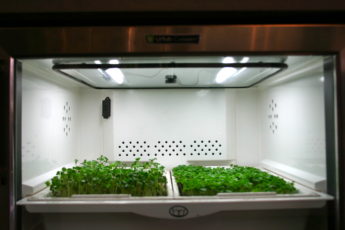
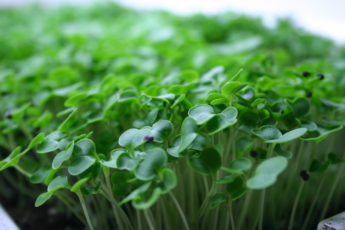
Most people don’t know what a sprout truly is. In fact I get a lot of people who think that when something is sprouted it has gone bad or gone off. In fact, the opposite is true.
When a grain, legume, nut or seed has been sprouted, the nutritional profile has more than doubled. Meaning protein, enzymes, fiber, antioxidants, vitamins and minerals and are at their optimum potential. Which means you will not only digest them efficiently, but you are getting so much more bang for your buck so to speak. Just a small amount goes a long way nutritionally speaking.
Sprouts are an alkalizing, living foods which continue to grow and gain vitamins after being harvested, which when compared to food bought at the supermarket that begin to lose their nutrient content as soon as they are picked (and are not then consumed for weeks on end), become very attractive – especially if you are trying to add more raw food to your diet.
Here are a couple of things to keep in mind.
How to Sprout
Get yourself a glass jar + cheesecloth or mesh lining. You can also use a stainless steel colander, sprouting jar or sprout kit. (Get your very own glass sprout kit – order one today at gethealthy@marniwasserman.com)
1. Soak your legume, grain, nut or seed for 8-10 hours.
2. Rinse and drain.
3. Continue to rinse and drain for 1-3 days until what you are sprouting starts to grow a shoot. When the shoot is as long as the item itself, it is ready to be consumed. (Important - be sure to rinse and drain at least 2 times/day or more. You can even add in 1 teaspoon of vitamin C or amla powder to one of your rinses to prevent mold growth)
4. After a sprout has formed be sure to consume right away and store in the fridge.
What to Sprout
Legumes: lentils, adzuki beans, chickpeas, mung beans
Grains: brown rice, quinoa, buckwheat, kamut, wild rice or wheat berries
Nuts: almonds, cashews
Seeds: sesame, sunflower, chia, flax
Benefits of Sprouts
All LEGUMES such as those mentioned above are highly concentrated in both protein and starch and are acid-forming unless sprouted. Sprouting helps to reduce the acid-alkaline imbalance which might occur when grains, legumes, and other proteins are used.
- Mung beans in particular, are similar in composition to fruits, are rich in vitamins A, C, and B complex.
GRAINS: Sprouted wheat berries has become a favorite with many who try to follow a natural diet. These sprouts contain vitamins C, E, B complex, magnesium, calcium, phosphorous, sodium, potassium, protein, enzymes, chlorophyll, and possibly B-17. In its cooked form, wheat is unacceptable to some individuals, causing mucus congestion, allergic reaction, and constipation. In its sprouted form, a large portion of starch is converted to simple sugars, making it a wholesome food acceptable to many who would otherwise need to eliminate wheat as a food source.
- Another way to use wheat is to grow the whole wheat berries as grass. The chlorophyll of wheat grass is very high. The wheat grass should be chewed to obtain the juice, discarding the pulp. Special juicers for wheat grass are now on the market.
Another grain amazing grain to sprout is buckwheat,which is rich in lecithin and rutin.
Most SEEDS contain a great deal of phosphorous, an important mineral for spiritual aspirants, who want to increase their alertness and mental abilities. Phosphorous is also necessary for healthy bones and teeth, a fact which makes sprouted seeds desirable for babies and children.
- Sunflower seeds are rich in vitamins B and D and all the essential amino acids.
- Sesame seeds are a rich source of calcium, iron, phosphorous, niacin, and protein.
- Alfalfa, probably the most popular sprouted seed, contains much chlorophyll, as well as vitamins A, B complex, C, D, E, G. K, and U. It also has large amounts of iron, calcium, phosphorous, and sulphur.
What if I don’t want to sprout?
Then get yourself equipped with some of these amazing products who have done a fabulous job for you!
Navitas Naturals – Sprouted flax and chia seeds
Sha Sha Bio Buds - (lentils, adzuki beans)
Bio Live – legume, rice and seed mixes, sprouted flax powders
Giddy Yoyo – pea shoots and sunflower sprouts – local to Toronto and will deliver to your door!
Wild Wood Tofu - Sprouted Tofu and Tempeh
See my latest ebook Purely Fit – that has a whole section on sprouts + some delicious recipes!
Or join my Raw Essentials Class this spring and learn how to do this hands on!
Soaking vs. Sprouting
When you soak a nut, grain, seed or legume you are making it easier to digest because you are neutralizing phytic acids (which is the indigestible component of grains and seeds). So when they are soaked, they become easier to digest and absorb.
It is possible to soak without sprouting. You can soak your grains before you cook them, for example soak brown rice or quinoa for 1 hour up to 8 hours before it is being cooked. Or you can soak whole rolled oats overnight and enjoy them the next morning either at room temperature or warmed up.
For nuts and seeds, they can just simply be soaked before you make them into a dip or a milk. However if you want to go the length to sprout them, they will require an extra day or so.
Why giddy-yoyo
May 16, 2011 by Marni Wasserman
Filed under For Your Health!, Nourishing Resources, Super Foods
I am continuously on the look out for great products that I want to support and promote – especially when it comes to chocolate. Mark and Bridgette have been at it for the last few years and have brought their love for chocolate to life.
They have masterfully created a line of raw chocolate bars that are made with Love and Gratitude, 70% plus pure cacao paste, chocolate, pure cane sugar and crafted essence extracts for each bar. Whether mocha, mint, ginger, orange, spice or just plain delicious original.
Why Giddy Chocolate?
As you know, I am not one for packaged products, but there are a few that I endorse and think are a great addition to a balanced lifestyle. Especially when it comes to chocolate. Since most commercial chocolate bars are just not an option (being loaded with sugar, dairy and containing cocoa that is devoid of any nutrition), why not get your hands on some pure giddy love. Carry them around in your purse or car (though not on a hot summer day). Keep them in your freezer, bring them to a movie, share with a friend – or mix into recipes.
I like to crumble my mint giddy yoyo bar on top of some Coconut Bliss ice cream for a chocolate – minty dessert. I have also crumbled down the original and ginger to top on some strawberries for a refreshing and tasty dessert. Your options are limitless.
The giddy yoyo chocolate is from the most pristine and exotic lands. They way the cacao processed is minimally invasive keeping the cacao as intact and as pure as possible. There is no side effects or strong caffeine-like reactions from consuming giddy yoyo, just pure enjoyment. To find out more see here.
Why Cacao?
The cacao bean is one of nature’s highest sources of magnesium and antioxidants, it is also high in iron, vitamin C, zinc, manganese, chromium, copper and fiber. Kind of like a multi-vitamin? It is also beneficial to your cardiovascular system, prevents against cancer, can balance blood sugar, lower cholesterol and makes you happy as cacao contains trytophan which is key for mood-enhancing and overall feeling good!
Now that you know why chocolate is so good for you, I want you to have the chance to try one of these amazing bars. I only have a few bars to give away, so please tell me why you are worthy of a giddy yoyo bar.
What you need to do to win is:
Comment below – tell me why you love chocolate or why you want to try some giddy yoyo.
Follow – Follow me on Twitter or become my Friend on Facebook and share this link and comment there.
Share – Post this link on Facebook and Twitter - linking post or tweet to me.
Like - Delicious Knowledge and giddy yoyo – and share on both of our pages.
Who ever shows the most activity and the most love – will win one of the 6 bars that I have to give away.
Abby’s Review on Holy Basil Tea
May 12, 2011 by Marni Wasserman
Filed under For Your Health!, Nourishing Resources, Super Foods, The Assistant's Blog
I love tea. When I say I love tea, I mean I was at David’s Tea three times this weekend, and I drink it every single day (I’m drinking Chocolate Chili Chai right now!). I drink it to wake me up and to squash my sweets cravings. Sometimes I just drink it because I’m cold (which is pretty often, I’d probably walk around in a blanket if I could). So when Marni introduced me to Holy Basil tea, I was game to learn about it. She came back from the Longevity Conference talking about it, so it had to be good, right?
Right indeed, this tea is like a prescription in a cup! As soon as I drank it I felt it in every cell. Holy Basil tea is made from the leaves and blossoms of the tulsi plant. It has hundreds of phytochemicals that include antioxidants, anti-bacterials, anti-virals, and immune enhancers. Drinking it balances the metabolism, builds stamina and promotes mental clarity. It is an adaptogen that helps the body deal with stress, and contains vitamin A, C, calcium, zinc, iron and chlorophyll.
Also, it helps to lower cholesterol and high blood pressure; it also promotes respiratory health and improves stamina. As if this wasn’t enough, it helps with digestive and gastrointestinal problems, helps the liver function properly, reduces cell and tissue damage from sun rays, radiation therapy and relieves inflammation from arthritis and other diseases.
Holy Basil tea used to be shown as a sign of affection and hospitality. It’s been an important part of Ayurvedic medicine for thousands of years. Who knew thousands of years ago that a tea would help neutralize dangerous chemicals that contribute to cancer, degenerative diseases and premature aging?
You can find different kinds of Holy Basil tea. It can be made from any of the three tulsi plants: Rama, Krishna, and Vana. We tried the Organic Traditions brand, it was fantastic. Try some, let us know what you think!
Nourishing Miso Noodle Soup
February 14, 2011 by Marni Wasserman
Filed under Delicious Recipes, For Your Health!, Nourishing Resources, SOUPS
I have grown up in a culture that is obsessed with noodle soup, except the base isn’t miso, it’s chicken! There is nothing wrong with this, as chicken soup is for the soul…right? It will cure any ache, pain, cough, cold or flu and it must be served by your mom! The nostalgia and truth still reigns truth (and reality) for so many, but not for me. Since chicken noodle soup has been out of my life for almost a decade, I have had to come up with other alternatives.
The wonderful result of this is non other than Miso – the wonder paste that makes the most nourishing base for a soup or broth. I have been using Miso for years now. I have tried different, brands, different varieties and no matter what – you will always have an amazing soup. ( I love Tradition Miso)
Facts about Miso:
Miso is a traditional Japanese food, and it is loaded with enzymes and vital nutrients. It is typically made with fermented soy, a grain such as rice or barley, koji (bacterial starter) and salt. It has a texture like peanut butter. Stay away from miso powders and dehydrated versions as they are loaded with excess sodium and other stabilizers and simply don’t taste as good.
Other than that – just have fun with your bowl or cup. It can be as simple as just the miso paste and water, or you can load it up with veggies and sea vegetables to up the nutrients, enzymes and overall vitality of your bowl of soup. And of course, it will just never taste as good unless it has some noodles in there. I use brown rice noodles and I also like to add in loads of sea veggies. Whether it is wakame, arame or sea spaghetti.
One thing to note about miso, is that you should never add it to boiling water or water heated too high (above 104F). If miso is heated, it’s nutritious enzymes and minerals will diminish. So be careful how you prepare it!
Why is it good for you:
Miso paste is vegan and can also be gluten free (as long as you buy one that is based with brown rice instead of barley). Miso is a beneficial digestive aid – as it helps to get your stomach enzymes working before a meal. Also if you are not hungry, leave it to miso to bring on your appetite and coat your stomach. That being said if you have an upset stomach, (diarrhea, constipation) miso will also help to balance out this discomfort. It is loaded with a natural bacterial culture that works to replenish and build up your gut. It is also rich in plant based protein. It contains a natural form of salt and sodium, so if you need a dose to replenish your body after an intense workout or even if you just have a headache or feel light-headed from sugar, a bowl of miso soup is your answer. As it will ground you and bring you back into balance. Miso is also known to be effective in reducing the effects of radiation, smoking, air pollution and other environmental toxins.
Types of Miso:
The darker the colour, the more potent its medicinal properties. However there are also lighter varieties that are a bit sweeter. Light or shiro miso is great for salad dressings, marinates or just a great compliment to dark rich miso in a soup.
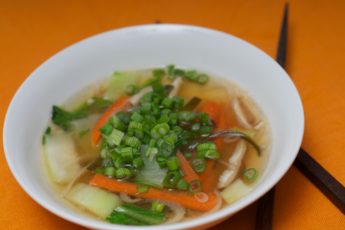
Nutrient-Rich Country Miso Soup
Ingredients:
10 cups water
4 – 8 dried or fresh shiitake mushrooms
1 inch piece of Kombu
1/2 cup wakame (aka Seaweed) – soaked for 5 minutes and cut into bite size pieces
4 pieces of kale or bok choy (with stems removed) and cut into bite size pieces
2-4 stalks of celery, cut crosswise into small slices
2 large carrots, peeled, halved and cut into small pieces
1 small onion, halved and cut into slices
1 cup of miso paste (1/2 dark and ½ light)
3 green onions
1 package of brown rice noodles cooked according to package (prepared separately).
Procedure:
1. Bring the 10 cups of water in a pot up to a high heat, lower heat and add the strip of Kombu and half of the shitake mushrooms (this adds extra nutrients to the soup broth.)
2. Let the water come to a simmer for 15-20minutes with the onion, carrots and celery.
3. At the end of the 20 minutes, add the rest of the shiitake mushrooms and simmer for another 10 minutes.
4. Following this add the kale or bok choy. Let the soup simmer for a final 10-15 minutes.
5. Remove 1-2 cups of liquid and stir the miso paste* in a separate bowl. Once dissolved, add the mixture back into the pot. Turn off the heat and stir.
Serve Soup in bowls and garnish with chopped green onions.
** Always add Miso paste at the end. Miso is very delicate and should never be boiled. It will destroy it’s natural enzymes.
Don’t feel like making a whole pot of soup?
Just warm up a some water to fill a mug or a small bowl and stir in 1 tablespoon of miso to warm up your soul, before, during or after a meal – or anytime for that matter!
Have you ever made Miso soup? What goes into it?
Wild Desert Plants (Smoothie)
January 7, 2011 by Marni Wasserman
Filed under Delicious Recipes, For Your Health!, Nourishing Resources, SMOOTHIES, Super Foods
I have been coming to Arizona for over 10 years, and I think I have taken my surroundings down here for granted. There is something just so pecular about the cactus. They portray most images that represent the southwest as a wild desert plant.
Everyone knows not to touch a cactus, and most would think that a cactus just has three arms and stands up tall. Yes that is true, most varieties do, but there are so many more. And what is even more amazing about these unique plants, is that they have healing properties ( like most green things in our natural world).
Cacti – represent a plant that is loaded with minerals, natural sugars, fiber and water. Once the prickly pieces are removed, a cactus is actually edible. It has a soft fleshy center that makes it a nice “meaty” dish.
Large round cactus leaves are called Nopal and sometimes they are topped with red little prickly pears. A big slab of cactus can be cooked up with some Mexican spices and served up with some brown rice! Tastes kind of like crisp asparagus or a ripe green bean. It is loaded with beta carotene, iron, B vitmains, vitamin C and calcium.
Another well known plant in this category is the Agave. Despite all of it’s recent controversial representation it is quite a remarkable plant. It takes 7 years to harvest nectar from just one fruit and will yield gallons of pure nectar. When it is done in this natural way, this is the way to enjoy the nectar. Since Agave has been in such high demand over the last few years, these natural practices have been lost and so has it’s nutrients. But nonetheless, they are still beautiful to look at and the nectar still tastes delicious (in some recipes).
Also interesting to note, is that all cacti are succulents but not all succenlents are cacti. This leads me to the wonderous, healing and amazing Aloe Vera plant which would fall into this category. It’s leaves are filled with a juicy gelly center the oozes it’s goodness into our health. It has all kinds of healing properties from soothing inflammation and burns while also being antibacterial and antifungal. You can drink it, eat it or put it directly on your skin. Having an Aloe Vera plant around your home is a great idea – they need so little attention, just a lot of sunlight!
See Aloe smoothie recipe below!
Some other fascinating plants I came across in the desert were Jojoba, Jade, Yucca and Creeping Snake Cactus, Ocotillo, Cholla and so many more!
It’s no wonder most of these desert plants are well protected with prickly pointers and tough skin – if I had all these healing abilities I would want to protect myself as best as I could! So be careful and handle your Cacti and desert plants with care!
As I mentioned earlier Aloe Vera can be taken internally, and what better way then in a smoothie. If you can’t get your hands on a fresh leaf – then getting a jug of pure 100% Aloe Vera juice is your next best option.
WILD ALOE BERRY SMOOTHIE DELIGHT
1-2 cups rice milk or hemp milk
1/4 cup pure aloe vera juice, or the inside gel of one leaf
1-2 scoops SunWarrior Protein (enter coupon code MW007 to get 5% off your order)
1 cup frozen berries
1 tbsp acai berry powder or 1 frozen pulp pack
1 ripe banana
1 tbsp Ormus Super Greens or 1 handful of spinach
1 tbsp each goji berries, chia seeds and manuka honey
Place all ingredients in a high-speed blender. Blend on high for 1-3 minutes.
Serve in two tall glasses with a Glass Dharma Straw!
Who needs Alfredo?
November 16, 2010 by Marni Wasserman
Filed under Delicious Recipes, For Your Health!, Nourishing Resources, PASTA
I certainly don’t, and neither do you! For more reasons than one. First of all Alfredo sauce is loaded with loads of butter, cream, milk and cheese. Yup, all in one recipe. That is a heck of a lot of work for your body to digest and for your heart to work. But the good news is that you don’t need Alfredo or a cream based sauce to have a delicious bowl of “creamy” noodles.
Once you make this recipe – you will never look a bowl of Alfredo or creamy pasta the same way. This recipe was created for my sea vegetables class – as a pseudo take on one of my favourite childhood meals “tuna casserole”. I used to love the stuff. Big white noodles loaded with tuna and cheesy sauce (kind of like an Alfredo). It was my absolute all time favourite. In fact anything with noodles and cheese made me very happy.
Being able to simulate that experience with amazing wholesome ingredients brings a smile to my face – gluten free brown rice noodles, a creamy sauce made from tahini along with some soaked, fresh torn wakame to give it that “salty” sea taste. The wakame is also adding a whole bunch of other nutrients and minerals into this dish as sea vegetables are super nutritious!
My cravings for this dish come every so often, and when they do– I can’t stop eating it. I can almost eat half of the amount I make each time because it just melts in your mouth.
It’s also that time of year when I actually feel really good about sitting down to a whole bowl full of noodles!
Okay, I will stop the teasing and get to the recipe – which doesn’t look all that exciting. But you just wait; you will not need Alfredo or cream based sauces ever again.
Enjoy this dish along side a bowl of steamed kale, a dark leafy green salad or some miso soup.
Happy eating!
Baked “Tuna” Casserole
What’s in it?
1 small onion, cut into thin slices
1 tablespoon sesame oil
1 cup wakame, soaked in cold water for 5 minutes, removed and chopped
2 tablespoons tamari
1 package of brown rice noodles or quinoa spiral noodles (Tinkyada Brand)
¾ cup water
½ cup tahini
5 tablespoons tamari
1/2 cup wheat free/gluten free/brown rice bread crumbs
How it’s made!
- Preheat oven to 375 F
- Sauté onion in sesame oil until transparent. Place wakame on top of onions. Add tamari, and cook for about 10 minutes until the liquid is absorbed.
- In the meantime, cook noodles until done. Drain and set aside.
- Mix together tahini, tamari and ¾ cup water until smooth. If the sauce should curdle, continue mixing.
- Mix onion, wakame mixture, noodles and tahini sauce together. Cover with breadcrumbs.
- Bake for approximately 20 minutes.
Super Seaweeds
November 10, 2010 by Marni Wasserman
Filed under Delicious Recipes, For Your Health!, Nourishing Resources, SOUPS, Super Foods
Seaweeds or sea vegetables are known as a super-food. And as a super-food, seaweed has many super qualities that can benefit us when we utilize seaweed either by eating or soaking in it. Luckily, here in Canada and in the US, we have some of the best seaweed varieties in the world. With over 25,000 varieties occurring world wide, we should have no lack of choices. Since Canada exports much of it’s bountiful seaweed harvest to Japan for food consumption, it is difficult to find a Canadian source of food-grade seaweed, though not impossible. As more and more people discover the health benefits of these sea vegetables that grow organically in our oceans, we’ll begin to see the healthy long life that is associated with it’s consumption.
All we have to do is look to the East; the Japanese have the lowest rates of cancer in the world because they enjoy seaweed served in 20 different ways everyday. It’s the brown seaweeds that are most commonly eaten by the Korean & Japanese for everyday consumption. The brown kelps are known for their delicious, mild taste, containing over 60 trace minerals that are 10-50X the concentrations of vitamins & minerals of any vegetable that grows on land. Minerals are the driving force behind all cellular mechanisms, and as such, are vital for our healthy bodies. They are required for cellular structure, fluid equilibrium, protein building and hormone production. Iodine was the first trace mineral classified as ‘essential for life’; therefore is one of the most important minerals that is concentrated within the brown kelps that plays an important role in thyroid health, immune strength, in preventing & reversing cancer, among other benefits.
We enjoy most of our seaweed from Maine Sea Coast Vegetables, they are carried at most health food stores including Big Carrot & Ambrosia in Toronto, they’ve been harvesting certified organic raw seaweed for over 30 years. The Kombu is best for salads & seaweed chips and the Alaria is also a favourite as a soup stock. Ancient Korean post natal care includes ‘Mi-yuk gook’ soup 3 times/day for 100 days following pregnancy for the new mother. This practice is still done today with the mother-in-law supplying the new mother her soup. The Japanese use a lot of Kombu in their dishes, it’s very common, most of us recognize that sushi is wrapped in Nori sheets which are flattened and mostly toasted, though there are raw varieties available. Nori is also known as Laver, which is enjoyed lightly toasted at 150 degrees C for about 10min. This gives it a crispy texture that can be crumbled over salads & soups and has a delicious nutty flavour, you wouldn’t guess that it’s seaweed. Laver is very high in all the major vitamin groups including an excellent source of B vitamins.
mi-yuk gook soup
1 package (2oz) of dried seaweed (1 ounce is fine for four servings)
Cut seaweed thinly while dry with scissors into water.
12-14 cups of water
2 teaspoons of organic miso
unrefined sea salt or Himalayan salt to taste
2 cloves of minced garlic (optional)
1 green onion