There are many options when it comes to eating #glutenfree ow.ly/lhobB @GlutenFreeFind @Glu10FreeGarage
Sweet, Sticky and Gooey
May 31, 2012 by Marni Wasserman
Filed under All, Contests/Giveaways, Delicious Recipes, For Your Health!, Marni's Products, Nourishing Resources, Recipes, SALADS

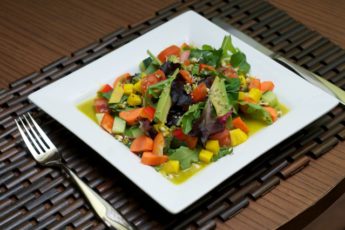
Raw Waldorf Salad - see below for recipe
These words describe one of the world’s healthiest and most renowned sweeteners, honey. Just the word itself makes people happy – and is used commonly in expressions of endearment and love. Nutritionally, honey loves to do sweet things to make your body just as happy on the inside.
It has been around for centuries and there are thousands of varieties. No matter what essence or flower based honey you choose, blueberry, clover, wildflower, buckwheat or orange blossom – just be sure that it is local, pure, unpasteurized or raw. Some people rule it out honey because it is a sugar or because it comes from an animal, but if you choose to savour in its incredible taste and healing properties, just enjoy and use it in moderation, as with all sweeteners.
Why is Honey so good for you?
- Honey helps to heal the stomach, pancreas and lungs – as it tonifies, soothes and nourishes the linings of these organs.
- Even though honey is a sugar, it is loaded with nutrients, enzymes and minerals – so you are getting more than just a sweet flavour.
- Honey contains antibiotic properties that can help to protect against various diseases, ailments and illnesses. From a sore throat to diarrhea – honey can help to build up your immunity and keep your body strong.
- Honey can be used topically to heal wounds (especially Manuka Honey) like abrasions, burns, sores and chapped skin.
How to use honey:
- Be sure to use honey raw or at very low heat temperatures to preserve its natural properties. High heat can destroy its natural enzymes and minerals.
- Honey can be stirred into herbal tea, spooned on hot cereal or smeared on sprouted bread.
- Honey can be added to dips, spreads, sauces and dressings.
- Since honey retains moisture – when it is used for baking instead of sugar – your baked goods will stay fresh longer.
Buying and Storing:
- Honey is available in liquid form but is also available in the comb or creamed.
- See your local grocery or health food store for different varieties. If you are able to get your honey fresh from a farmer’s market or honey farm directly, that is always the best!
- Store honey at room temperature away from direct sunlight. Do not refrigerate as this speeds crystallization, which thickens honey and turns it cloudy and grainy. (To liquefy– remove the lid place the honey container in a saucepan with water and heat slowly until crystals dissolve).
One of my favourite ways to use honey is raw by putting it into a salad dressing. See one of my favourite summer dressings below!
Raw Waldorf Salad
What’s In It?
1 cup of arugula, spinach or mixed greens
1 large head of red leaf lettuce (or two cups arugula)
1⁄4 cup peeled jicama or carrots
2 stalks celery, diced
1 apple, diced
1 cup sunflower sprouts or mung bean sprouts
1 avocado, peeled and chopped
1⁄2 cup walnuts, chopped
1 tablespoon hemp seeds
Dressing:
1⁄4 cup hemp oil
2 tablespoons raw tahini (or 1⁄2 cup if no hemp oil)
2 tablespoons Filsingers apple cider vinegar
1 tablespoon Nude Bee honey
2 tablespoon Bragg’s Aminos
2 tablespoons to 1⁄4 cup freshly squeezed orange juice
Filtered water (add slowly, only if needed without hemp oil)
How It’s Made
1. Combine the dressing ingredients in a blender and blend until smooth. 2. Pour over salad ingredients and toss until well coated.
Delicious Knowledge by Marni
When making a salad it’s important to think of colour, texture and flavour to make it interesting and enticing, and this salad has it all. Change up the veggies based on season, maybe use pears instead of apples, spinach instead of arugula, or try olive oil instead of hemp oil. There are endless possibilities. There is enough sustaining energy in this salad to make a complete spring or summer lunch or dinner.
Contest Alert!
I’m giving away a bottle (330g) of Blueberry Nude Bee Honey! Tell me why you love honey and your favorite uses, and I’ll enter you in the contest for a chance to win the bottle! At the end of the week, I’ll choose the best answer to be rewarded with the prize. Good luck Torontonians! Contest closes June 7th, 2012. (Winner must be in Toronto).
In health,
You can get more delicious knowledge by checking out Marni’s Purely Fit e-book, available here:http://www.marniwasserman.com/ebooks/
Looking to buy a bottle of Nude Bee Honey? Just email gethealthy@marniwasserman.com.
Team Tonica Kombucha 30 Day Challenge!
January 23, 2012 by Joelle
Filed under For Your Health!, Nourishing Resources, Super Foods, The Assistant's Blog
I would like to introduce you to Mia, my assistant! Together we have taken on a 30 day Tonica Kombucha Challenge. I have been a kombucha drinker for a couple of years, so my challenge is to up the amount I am drinking everyday (to half a bottle) and track any changes I notice. Whereas with Mia, kombucha is completely new to her body! So she is going to have totally different experience. Together we are going to track our challenge with you and share all the fun details! Sip along with us and share your challenge!
Having never tried kombucha before working for Marni Wasserman and the Fully Nourished Team, I was curious what all the fuss was about! Marni offered me a bottle of Tonica Kombucha, I tried it, and wow! I could feel it working after just a few sips. Tonica Kombucha got rid of that sluggish, heavy feeling that sometimes follows a meal. It allowed me to get right back to work with ease and I felt great!
That’s when Zoey from Tonica suggested that I do a 30 Day Tonica Kombucha challenge to really feel the full effects of her amazing product! Of course I jumped right in, and am about 1/3 of the way through. More details to come on the specifics of how it makes me feel, but in the meantime I thought I’d leave you with some interesting facts on the background of kombucha that Zoey shared with me!
1. Kombucha is a living, cultured beverage made by fermenting sweetened tea with the kombucha culture. During the 3-5 week culturing process, the kombucha culture converts the tea solution into a living beverage filled with billions of active enzymes , cleansing acids, and antioxidants.
2. Kombucha can be traced back as far as 221 bc, when the emperor of the Tsin Dynasty first declared it the kingdom’s “Tea of Immortality”. Today folks all across Japan and China, and most especially in Eastern European countries recall their grandparents making this health boosting brew daily for their families.
More to come from my amazing Tonica Kombucha 30 Day Challenge!
-Mia
Have you ever tried Kombucha?
Have you ever tried Tonica Kombucha?
What have you noticed?
Let it sprout!
December 2, 2011 by Marni Wasserman
Filed under All, Delicious Recipes, For Your Health!, Nourishing Resources, Super Foods
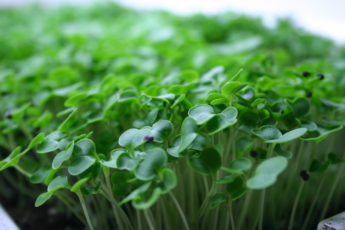
Most people don’t know what a sprout truly is. In fact I get a lot of people who think that when something is sprouted it has gone bad or gone off. In fact, the opposite is true.
When a grain, legume, nut or seed has been sprouted, the nutritional profile has more than doubled. Meaning protein, enzymes, fiber, antioxidants, vitamins and minerals and are at their optimum potential. Which means you will not only digest them efficiently, but you are getting so much more bang for your buck so to speak. Just a small amount goes a long way nutritionally speaking.
Sprouts are an alkalizing, living foods which continue to grow and gain vitamins after being harvested, which when compared to food bought at the supermarket that begin to lose their nutrient content as soon as they are picked (and are not then consumed for weeks on end), become very attractive – especially if you are trying to add more raw food to your diet.
Here are a couple of things to keep in mind.
How to Sprout
Get yourself a glass jar + cheesecloth or mesh lining. You can also use a stainless steel colander, sprouting jar or sprout kit. (Get your very own glass sprout kit – order one today at gethealthy@marniwasserman.com)
1. Soak your legume, grain, nut or seed for 8-10 hours.
2. Rinse and drain.
3. Continue to rinse and drain for 1-3 days until what you are sprouting starts to grow a shoot. When the shoot is as long as the item itself, it is ready to be consumed. (Important - be sure to rinse and drain at least 2 times/day or more. You can even add in 1 teaspoon of vitamin C or amla powder to one of your rinses to prevent mold growth)
4. After a sprout has formed be sure to consume right away and store in the fridge.
What to Sprout
Legumes: lentils, adzuki beans, chickpeas, mung beans
Grains: brown rice, quinoa, buckwheat, kamut, wild rice or wheat berries
Nuts: almonds, cashews
Seeds: sesame, sunflower, chia, flax
Benefits of Sprouts
All LEGUMES such as those mentioned above are highly concentrated in both protein and starch and are acid-forming unless sprouted. Sprouting helps to reduce the acid-alkaline imbalance which might occur when grains, legumes, and other proteins are used.
- Mung beans in particular, are similar in composition to fruits, are rich in vitamins A, C, and B complex.
GRAINS: Sprouted wheat berries has become a favorite with many who try to follow a natural diet. These sprouts contain vitamins C, E, B complex, magnesium, calcium, phosphorous, sodium, potassium, protein, enzymes, chlorophyll, and possibly B-17. In its cooked form, wheat is unacceptable to some individuals, causing mucus congestion, allergic reaction, and constipation. In its sprouted form, a large portion of starch is converted to simple sugars, making it a wholesome food acceptable to many who would otherwise need to eliminate wheat as a food source.
- Another way to use wheat is to grow the whole wheat berries as grass. The chlorophyll of wheat grass is very high. The wheat grass should be chewed to obtain the juice, discarding the pulp. Special juicers for wheat grass are now on the market.
Another grain amazing grain to sprout is buckwheat,which is rich in lecithin and rutin.
Most SEEDS contain a great deal of phosphorous, an important mineral for spiritual aspirants, who want to increase their alertness and mental abilities. Phosphorous is also necessary for healthy bones and teeth, a fact which makes sprouted seeds desirable for babies and children.
- Sunflower seeds are rich in vitamins B and D and all the essential amino acids.
- Sesame seeds are a rich source of calcium, iron, phosphorous, niacin, and protein.
- Alfalfa, probably the most popular sprouted seed, contains much chlorophyll, as well as vitamins A, B complex, C, D, E, G. K, and U. It also has large amounts of iron, calcium, phosphorous, and sulphur.
What if I don’t want to sprout?
Then get yourself equipped with some of these amazing products who have done a fabulous job for you!
Navitas Naturals – Sprouted flax and chia seeds
Sha Sha Bio Buds - (lentils, adzuki beans)
Bio Live – legume, rice and seed mixes, sprouted flax powders
Giddy Yoyo – pea shoots and sunflower sprouts – local to Toronto and will deliver to your door!
Wild Wood Tofu - Sprouted Tofu and Tempeh
See my latest ebook Purely Fit – that has a whole section on sprouts + some delicious recipes!
Or join my Raw Essentials Class this spring and learn how to do this hands on!
Soaking vs. Sprouting
When you soak a nut, grain, seed or legume you are making it easier to digest because you are neutralizing phytic acids (which is the indigestible component of grains and seeds). So when they are soaked, they become easier to digest and absorb.
It is possible to soak without sprouting. You can soak your grains before you cook them, for example soak brown rice or quinoa for 1 hour up to 8 hours before it is being cooked. Or you can soak whole rolled oats overnight and enjoy them the next morning either at room temperature or warmed up.
For nuts and seeds, they can just simply be soaked before you make them into a dip or a milk. However if you want to go the length to sprout them, they will require an extra day or so.
The Secret to my Pad Thai
February 21, 2011 by Marni Wasserman
Filed under Delicious Recipes, For Your Health!, MAINS, Nourishing Resources, Super Foods
You want to know the secret…it’s coconut. A modern day Pad Thai with pure wholesome ingredients and natural condiments. I would have to say it’s been at at least 6 + years since I have eaten a traditional Pad Thai, loaded with low grade oil, fish/oyster sauce and sugar – those ingredients are long gone from my diet. So the time has come to re-create my own version.
Let’s talk about how Coconut plays a role in my version of a Pad Thai. A new line of favourites have made their way to the organic, raw, veggie market place. That is Coconut Secret’s Amino Acids, Vinegar and Nectar. (You can order them in Toronto HERE!) They are raw low glycemic, gluten free and highly nutritious, oh… and make your meals and recipes thrive with unique flavour. Each one has it’s own versatility and use. Coconut Aminos, can replace traditional soy sauce and even natural soy sauce like tamari. I do love tamari, but it is nice to replace it once in a while. Coconut vinegar can be used for salad dressings and sauces basically anywhere that balsamic, brown rice, apple cider vinegar or any acid would be used. Now the Nectar which has truly become one of my new favourite ingredients is amazing to naturally sweeten desserts, pancakes, sauces, dressings, stirred into yogurt or a smoothie. It is light and has a gooey texture that is slightly addicting. They can all be used individually, but I decided to use them all together in a tangy sweet and savoruy Pad Thai sauce, that is truly like no other! As you may or may not know Coconut it’s recognition as a super ingredient, as it it is loaded with essential nutrients, vitamins and minerals to find out more benefits look here.
So that takes care of the sauce…but the base of my pad was none other than one of my other favourite ingredients, kelp noodles. These can be found at several health food stores or restaurants in your local area. They come in a package and need to be soaked to be enjoyed. I took them one step further and threw them into my wok to soak up flavour and soften even more into my delicious Thai sauce. I had only ever eaten them raw before this, and now, I might just reconsider when and where I use rice noodles over kelp noodles! They are extremely light and easy to digest, they have no calories (not that I care), very little flavour and will adapt to any recipe you choose to use them with. So your options are really limitless.
Then I loaded this dish with a combination of veggies that just seemed to work. Sweet potatoes taste good in anything so those went into the pan. There always has to be some green veggies with my meal – so broccoli and kale it was for this one. I am not big on tofu and use it probably once a month if that, but when I do, it’s got to be sprouted and organic – I take no risks when it comes to Soy and GMO’s. Wildwood has a great brand that I actually enjoy. To be honest, Ryan is the one who loves tofu – so the addition was really for him. I am more of a tempeh fan
Then I topped everything off with some home sprouted mung beans, loaded with fiber, enzymes, protein and just bursting with crunch -to liven up each bite!
So there you have it. The secret is out. Now I encourage you to make this and report back to me!
Veggie Pad Thai
The Sauce:
2 tbsp coconut vinegar
5 tbsp coconut aminos
4 tbsp coconut nectar
2 tbsp almond butter
3 tbsp grapeseed oil
2 cloves of garlic, minced
2 tbsp ginger, grated
2 cups of yams, cut into thin chunks
1 head of broccoli, cut into florets
1 bunch of kale, chopped
3 scallions, chopped
1/2 block of sprouted tofu, cut into cubes (can also use tempeh)
1/2 cup sprouted mung beans
1 package of kelp noodles, rinsed and soaked in water with 1 tbsp lemon juice or 1 package of brown rice noodles
1. In a small bowl, combine the coconut vinegar, aminos and nectar, almond butter and 1 tablespoon of grapeseed oil. Set aside.
2. In a wok, satuey the tofu, garlic, ginger, scallions and yams in 2 tablespoon grapeseed oil for several minutes, stirring to prevent them from sticking.
3. When yams are soft, stir in the broccoli and allow to soften.
4. Pour the sauce and the kelp noodles into the wok, stir to combine and cover for a few minutes to meld together.
5. Add in the chopped kale and allow to wilt for a few minutes, while still remaining green.
6. Gently stir the noodles into the vegetables and sauce to combine. Remove from heat and serve.
Garnish with mung bean sprouts and chopped scallions.
You can get more delicious knowledge by checking out Marni’s Veggin’ Comfortably e-book, available here: http://www.marniwasserman.com/ebooks/
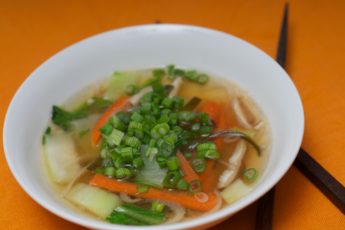
Nourishing Miso Noodle Soup
February 14, 2011 by Marni Wasserman
Filed under Delicious Recipes, For Your Health!, Nourishing Resources, SOUPS
I have grown up in a culture that is obsessed with noodle soup, except the base isn’t miso, it’s chicken! There is nothing wrong with this, as chicken soup is for the soul…right? It will cure any ache, pain, cough, cold or flu and it must be served by your mom! The nostalgia and truth still reigns truth (and reality) for so many, but not for me. Since chicken noodle soup has been out of my life for almost a decade, I have had to come up with other alternatives.
The wonderful result of this is non other than Miso – the wonder paste that makes the most nourishing base for a soup or broth. I have been using Miso for years now. I have tried different, brands, different varieties and no matter what – you will always have an amazing soup. ( I love Tradition Miso)
Facts about Miso:
Miso is a traditional Japanese food, and it is loaded with enzymes and vital nutrients. It is typically made with fermented soy, a grain such as rice or barley, koji (bacterial starter) and salt. It has a texture like peanut butter. Stay away from miso powders and dehydrated versions as they are loaded with excess sodium and other stabilizers and simply don’t taste as good.
Other than that – just have fun with your bowl or cup. It can be as simple as just the miso paste and water, or you can load it up with veggies and sea vegetables to up the nutrients, enzymes and overall vitality of your bowl of soup. And of course, it will just never taste as good unless it has some noodles in there. I use brown rice noodles and I also like to add in loads of sea veggies. Whether it is wakame, arame or sea spaghetti.
One thing to note about miso, is that you should never add it to boiling water or water heated too high (above 104F). If miso is heated, it’s nutritious enzymes and minerals will diminish. So be careful how you prepare it!
Why is it good for you:
Miso paste is vegan and can also be gluten free (as long as you buy one that is based with brown rice instead of barley). Miso is a beneficial digestive aid – as it helps to get your stomach enzymes working before a meal. Also if you are not hungry, leave it to miso to bring on your appetite and coat your stomach. That being said if you have an upset stomach, (diarrhea, constipation) miso will also help to balance out this discomfort. It is loaded with a natural bacterial culture that works to replenish and build up your gut. It is also rich in plant based protein. It contains a natural form of salt and sodium, so if you need a dose to replenish your body after an intense workout or even if you just have a headache or feel light-headed from sugar, a bowl of miso soup is your answer. As it will ground you and bring you back into balance. Miso is also known to be effective in reducing the effects of radiation, smoking, air pollution and other environmental toxins.
Types of Miso:
The darker the colour, the more potent its medicinal properties. However there are also lighter varieties that are a bit sweeter. Light or shiro miso is great for salad dressings, marinates or just a great compliment to dark rich miso in a soup.
Nutrient-Rich Country Miso Soup
Ingredients:
10 cups water
4 – 8 dried or fresh shiitake mushrooms
1 inch piece of Kombu
1/2 cup wakame (aka Seaweed) – soaked for 5 minutes and cut into bite size pieces
4 pieces of kale or bok choy (with stems removed) and cut into bite size pieces
2-4 stalks of celery, cut crosswise into small slices
2 large carrots, peeled, halved and cut into small pieces
1 small onion, halved and cut into slices
1 cup of miso paste (1/2 dark and ½ light)
3 green onions
1 package of brown rice noodles cooked according to package (prepared separately).
Procedure:
1. Bring the 10 cups of water in a pot up to a high heat, lower heat and add the strip of Kombu and half of the shitake mushrooms (this adds extra nutrients to the soup broth.)
2. Let the water come to a simmer for 15-20minutes with the onion, carrots and celery.
3. At the end of the 20 minutes, add the rest of the shiitake mushrooms and simmer for another 10 minutes.
4. Following this add the kale or bok choy. Let the soup simmer for a final 10-15 minutes.
5. Remove 1-2 cups of liquid and stir the miso paste* in a separate bowl. Once dissolved, add the mixture back into the pot. Turn off the heat and stir.
Serve Soup in bowls and garnish with chopped green onions.
** Always add Miso paste at the end. Miso is very delicate and should never be boiled. It will destroy it’s natural enzymes.
Don’t feel like making a whole pot of soup?
Just warm up a some water to fill a mug or a small bowl and stir in 1 tablespoon of miso to warm up your soul, before, during or after a meal – or anytime for that matter!
Have you ever made Miso soup? What goes into it?
Super Seaweeds
November 10, 2010 by Marni Wasserman
Filed under Delicious Recipes, For Your Health!, Nourishing Resources, SOUPS, Super Foods
Seaweeds or sea vegetables are known as a super-food. And as a super-food, seaweed has many super qualities that can benefit us when we utilize seaweed either by eating or soaking in it. Luckily, here in Canada and in the US, we have some of the best seaweed varieties in the world. With over 25,000 varieties occurring world wide, we should have no lack of choices. Since Canada exports much of it’s bountiful seaweed harvest to Japan for food consumption, it is difficult to find a Canadian source of food-grade seaweed, though not impossible. As more and more people discover the health benefits of these sea vegetables that grow organically in our oceans, we’ll begin to see the healthy long life that is associated with it’s consumption.
All we have to do is look to the East; the Japanese have the lowest rates of cancer in the world because they enjoy seaweed served in 20 different ways everyday. It’s the brown seaweeds that are most commonly eaten by the Korean & Japanese for everyday consumption. The brown kelps are known for their delicious, mild taste, containing over 60 trace minerals that are 10-50X the concentrations of vitamins & minerals of any vegetable that grows on land. Minerals are the driving force behind all cellular mechanisms, and as such, are vital for our healthy bodies. They are required for cellular structure, fluid equilibrium, protein building and hormone production. Iodine was the first trace mineral classified as ‘essential for life’; therefore is one of the most important minerals that is concentrated within the brown kelps that plays an important role in thyroid health, immune strength, in preventing & reversing cancer, among other benefits.
We enjoy most of our seaweed from Maine Sea Coast Vegetables, they are carried at most health food stores including Big Carrot & Ambrosia in Toronto, they’ve been harvesting certified organic raw seaweed for over 30 years. The Kombu is best for salads & seaweed chips and the Alaria is also a favourite as a soup stock. Ancient Korean post natal care includes ‘Mi-yuk gook’ soup 3 times/day for 100 days following pregnancy for the new mother. This practice is still done today with the mother-in-law supplying the new mother her soup. The Japanese use a lot of Kombu in their dishes, it’s very common, most of us recognize that sushi is wrapped in Nori sheets which are flattened and mostly toasted, though there are raw varieties available. Nori is also known as Laver, which is enjoyed lightly toasted at 150 degrees C for about 10min. This gives it a crispy texture that can be crumbled over salads & soups and has a delicious nutty flavour, you wouldn’t guess that it’s seaweed. Laver is very high in all the major vitamin groups including an excellent source of B vitamins.
mi-yuk gook soup
1 package (2oz) of dried seaweed (1 ounce is fine for four servings)
Cut seaweed thinly while dry with scissors into water.
12-14 cups of water
2 teaspoons of organic miso
unrefined sea salt or Himalayan salt to taste
2 cloves of minced garlic (optional)
1 green onion
Boost up with a Prana Bar!
September 7, 2010 by Marni Wasserman
Filed under For Your Health!, Nourishing Resources, Super Foods
If you haven’t tried or heard of Prana Bars before, let me give you an introduction. These super-powered bars first made their way into my life when I was living in New York City going to Culinary School. I lived around the corner from this amazing health food store that was always stocked with unique products. I grabbed a handful of these bars one day, as I was enticed by their bright, colourful packaging and the ingredients were just as exciting. I am so happy I stumbled upon them because now every time I go to the US, I stock up (as they are unfortunately not available in Canada)! There are very few bars on the market that I stand behind and these happen to be one of them!
Prana bars have fun combinations like goji- goldenberry, acai-coconut, raspberry-pomegranate. So exciting and unique. Every bite is delicious and they are loaded with enzymes, protein and fiber. They are also raw, organic, unprocessed, non-gmo, soy free, no sugar added, gluten free, dairy free, vegan and all natural! They fill you up and make a great snack! (Delicious Snacks are my theme for the next few weeks – and these bars are included as one of the options for my packaged product guide to snacks – see blog post coming up soon!) Whether you enjoy them for breakfast, before a workout, after a workout, for a midday snack or just to tie you over between meals – they are sure to give you a boost!
So if you haven’t had the pleasure of trying these bars yet, I am offering a little taster teaser contest!!
The first 10 people in CANADA ONLY: (sorry USA’ers I can’t send food to you – but you can order them directly from Prana Bars!)
1. To comment below and tell me why they would love to try a Prana bar
2. To Tweet about this Contest (+ follow me on twitter) – and comment about it below
3. To Post it on Facebook (+ become a Fan of Delicious Knowledge) – and comment about it below
Will be the lucky recipients of one of these super delicious bars!
If you are one of the first 10 to respond to any of the above you will get first picks of the flavour combination that you would just love to try!
Ready. Set. GO!
Goldenberry Goji
Apricot Goji
Raspberry Pomegranate
Apple Pie
Apricot Pumpkin
Coconut Acai
Mango Maca
Blueberry Coconut
Cashew Almond
Mango Maca
Get Juiced…
May 8, 2009 by Marni Wasserman
Filed under BEVERAGES, Delicious Recipes, For Your Health!, Nourishing Resources, Super Foods
***JOIN MY URBAN 1Day DETOX RETREAT THIS SUMMER ***
If you aren’t juicing already…you are truly missing out on the powerhouse of nutrients one glass of fresh vegetable juice has to offer. I am not talking about getting some pre-made concoction at the grocery store that claims that it is all natural – I am talking about making your own organic, whole vegetable juice in the comfort of your own kitchen!
Juicing is key to vitality and an overall sense of well being. It is even a great part of a good cleansing regime. Juices are a great addition to any diet. Even if it is just as simple as apple juice…I am encouraging you to make them!
You can go as basic as you would like with juicers, they range in price from $150 – $500. So pick and choose what works for your lifestyle and your budget. But remember, the more expensive juicers give you more juice and more nutrients and enzymes. (This is due to the way the juice is extracted from the vegetables.)
Check out online resources and other places in your area that may sell juicers and ask around to other people you may know – which juicer they use and if they like it!
If you are not ready for a juicer yet…
At the very least start your day by making a cup of lemon juice! You don’t even need a juicer for that! Squeeze a half of a lemon into some warm or cool water and drink on an empty stomach.
Another excellent way to cleanse your body (and flush your kidneys) and get your metabolism going for the day.
If you have a blender or a vita-mix you can make all kinds of concoctions and pour your juice through a sieve and capture all the pulp – or you can make a vegetable smoothie with the pulp (see the Simply Smooth posting below!)
But if you do get a juicer and you want a recipe to crack in your new toy…here it is!
Revitalizing (Salad) Juice
I call this a salad juice because instead of making a salad for lunch you can juice it! But don’t do this all the time as you don’t get any of the beneficial fibre from the vegetables. This is a great recipe for days when you don’t really feel like eating or when you are cleansing!
2 Carrots
Handful of Sunflower sprouts
2 small (really small) Beets
1 or 2 apples (Granny smith work nice)
2 stalks of Celery
1 inch piece of Ginger
1/2 Lemon
handful of Collard green or kale
small handful of Romaine lettuce
Place everything into you juicer according to instructions….best to do one vegetable at a time and finish off with lemons because it cleans the juicer at the end!
Enjoy!